
Does Cold Laser Therapy for Tendonitis Help?
- 2 days ago
- 5 min read
A tendon can stay sore long after the moment that caused the injury is forgotten. You may notice it when you grip a coffee mug, climb stairs, reach overhead, or return to a run. Cold laser therapy for tendonitis is one option that may help reduce pain and support the healing process, especially when it is part of a broader rehabilitation plan rather than a stand-alone fix.
Tendonitis is often used as a catch-all term for tendon pain, but persistent symptoms are not always caused by new inflammation alone. Many cases involve tendon irritation or degeneration from repeated loading, a sudden increase in activity, poor movement mechanics, or inadequate recovery. That distinction matters because the most effective care usually combines symptom relief with a gradual plan to restore the tendon’s capacity to handle movement and load.
What cold laser therapy does for tendonitis
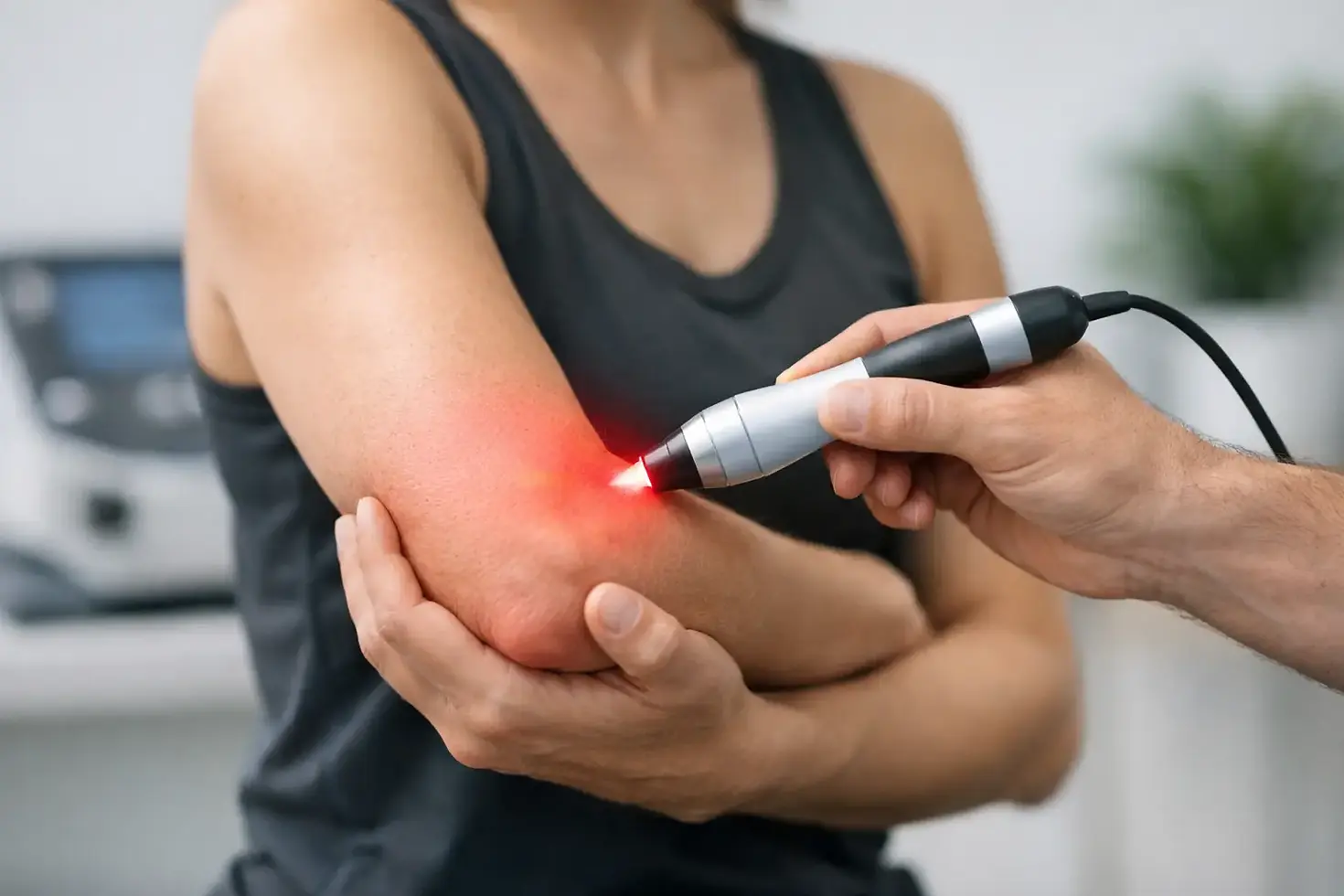
Cold laser therapy, also called low-level laser therapy or photobiomodulation, uses specific wavelengths of light to deliver energy to targeted tissue. Unlike surgical lasers, it does not cut, burn, or heat the skin. The goal is to stimulate cellular activity in a way that may help modulate pain, reduce inflammation in some cases, and support tissue repair.
At Kinetica Health Group, Theralase cold laser therapy may be considered for tendon conditions when it fits the patient’s assessment and recovery goals. Treatment is noninvasive and typically feels comfortable. Many people feel little more than the gentle contact of the laser applicator on the skin.
The light is applied over the painful tendon and surrounding structures for a prescribed amount of time. The exact treatment area, dose, and frequency depend on the condition, symptom duration, location of the tendon, and your overall treatment plan. A sore Achilles tendon requires a different approach than tennis elbow, rotator cuff irritation, or thumb tendon pain.
When cold laser therapy for tendonitis may be useful
Laser therapy can be a helpful adjunct when tendon pain is limiting daily movement, work tasks, exercise, or rehabilitation progress. It may be used for common concerns such as Achilles tendon pain, plantar fascia-related heel pain, patellar tendon pain near the knee, tennis or golfer’s elbow, shoulder tendon irritation, and wrist or thumb overuse injuries.
It is often most useful early in care when pain is making it difficult to begin appropriate strengthening, or during a flare-up that has interrupted an otherwise steady recovery. By helping settle symptoms, treatment may make it easier to tolerate the exercises and hands-on care that address the factors behind the problem.
That said, laser therapy is not a shortcut around tendon loading. Tendons need progressive, well-timed strength work to become more resilient. If a runner has developed Achilles pain after increasing mileage too quickly, for example, symptom relief alone will not solve the issue. Their plan may also need activity adjustments, calf strengthening, gait or footwear considerations, and a structured return to running.
What the evidence says
Research on low-level laser therapy for tendon pain is promising, but results vary. Studies use different laser settings, treatment schedules, patient groups, and outcome measures, which makes it difficult to apply one result to every person. Some research suggests laser therapy can reduce pain and improve function for certain musculoskeletal conditions, particularly when appropriate dosing is used alongside exercise-based rehabilitation.
The practical takeaway is that cold laser therapy should be viewed as one evidence-informed tool, not a guarantee or replacement for a full assessment. A clinician should determine whether the source of pain is likely the tendon itself, a nearby joint, nerve irritation, muscle weakness, or a combination of factors. Treating the right problem matters more than applying the same modality to every painful area.
What a treatment plan can look like
Your first visit should begin with a detailed assessment of your symptoms, movement, daily demands, and goals. A clinician may check the tendon’s sensitivity, range of motion, strength, balance, and how your body responds to specific movements. They will also ask about changes in training, work duties, footwear, sleep, previous injuries, and any health factors that could affect recovery.
If cold laser therapy is appropriate, it may be included with other care such as physiotherapy, chiropractic treatment, massage therapy, acupuncture, Active Release Techniques, Graston or IASTM, or functional movement training. The right combination depends on the person. Someone with elbow pain from repetitive computer and lifting tasks may benefit from ergonomic changes and forearm strengthening, while a recreational athlete with knee tendon pain may need a carefully progressed lower-body loading program.
Sessions are usually brief, but the full course of care varies. Acute symptoms may respond differently than pain that has been present for many months. Some people notice a reduction in soreness after a few visits, while others improve gradually as treatment helps them participate more consistently in rehabilitation. Your provider should reassess progress rather than continuing a treatment indefinitely without clear goals.
What you can do between appointments
The most useful home plan is rarely complete rest. While a severely irritated tendon may need a temporary reduction in aggravating activity, avoiding all movement for too long can reduce strength and make the tendon less prepared for normal demands. The goal is to find a level of activity that is manageable while gradually rebuilding tolerance.
A clinician may recommend modifying the movements that repeatedly trigger symptoms, then introducing specific exercises at a tolerable level. For example, this might mean reducing hill running temporarily, changing how often you perform overhead lifts, using a brace for short-term support, or breaking repetitive work into smaller blocks. Pain during recovery is not always a sign of damage, but sharp pain, worsening symptoms, or lingering pain that steadily increases after activity should be discussed with your provider.
General recovery habits matter too. Consistent sleep, enough protein and overall nutrition, sensible training progressions, and recovery days can all influence how well your body adapts. These steps are not flashy, but they give a tendon the conditions it needs to respond to treatment and exercise.
When tendon pain needs further evaluation
Not every painful tendon area is tendonitis. Seek prompt assessment if you experienced a sudden pop, significant swelling or bruising, marked weakness, inability to bear weight or use the limb normally, numbness, fever, or pain that is severe and unexplained. These symptoms can point to a tear, fracture, infection, nerve issue, or another condition requiring different care.
It is also worth getting assessed when pain keeps returning despite rest, is affecting your work or sport, or has lasted more than a few weeks. Persistent tendon pain is easier to address when you understand what is driving it and have a plan that progresses with you.
For people in Leslieville, Riverdale, East York, and nearby East Toronto neighborhoods, coordinated care can make recovery feel less fragmented. A personalized plan can combine symptom management with hands-on treatment and progressive movement, while flexible scheduling and direct billing help make regular care more manageable.
The best next step is not simply finding a treatment that makes the tendon quieter for a day or two. It is finding care that helps you return to the activities that matter to you with more confidence, strength, and a clearer plan for staying active.


Comments