

How to Treat Repetitive Strain and Prevent It
That ache in your wrist after a long workday, the tightness creeping from your neck into your shoulder, or the forearm pain that returns every time you pick up a racket is not something to simply push through. Learning how to treat repetitive strain starts with recognizing that these injuries usually build gradually - and recovery works best when treatment addresses both irritated tissues and the movement habits that keep aggravating them.
Repetitive strain injuries can affect office workers, tradespeople, musicians, caregivers, athletes, and anyone whose work or hobbies require the same motion again and again. With the right changes and a personalized rehabilitation plan, most people can reduce symptoms, rebuild tolerance, and return to the activities that matter to them.
What repetitive strain feels like
Repetitive strain is an umbrella term for pain and dysfunction caused by repeated movement, sustained positions, forceful effort, or insufficient recovery. It often affects the wrist, hand, elbow, shoulder, neck, upper back, hip, knee, or foot. Common examples include tennis elbow, tendinopathy, carpal tunnel symptoms, Achilles irritation, and neck pain related to prolonged computer use.
Symptoms do not always stay at the site of the problem. A sore forearm may be connected to gripping habits, shoulder weakness, or a workstation that forces your wrist into an awkward position. Similarly, persistent neck tension may involve limited upper-back mobility, poor endurance in supporting muscles, stress, and long periods without changing position.
Early signs can include stiffness when you begin an activity, aching later in the day, tenderness, reduced grip strength, tingling, or pain that settles with rest but returns quickly. As irritation progresses, symptoms may begin earlier, last longer, and interfere with sleep or everyday tasks.
How to treat repetitive strain without stopping your life
The goal is rarely complete inactivity. Rest can calm an irritated area in the short term, but avoiding all movement for too long can reduce strength and make the body less prepared for normal demands. A better approach is relative rest: temporarily reduce the activities, positions, or loads that clearly flare symptoms while staying active within a tolerable range.
For example, someone with wrist pain from computer work may shorten uninterrupted typing sessions, use keyboard shortcuts, adjust mouse placement, and take brief movement breaks. A runner with Achilles pain may reduce hills or speed work while maintaining easier training if it does not worsen symptoms. The right adjustment depends on the body part involved, the severity of symptoms, and the demands you cannot avoid.
A helpful rule is to watch your response over the next 24 hours. Mild discomfort during an activity may be acceptable in some cases, particularly during a guided rehabilitation program. Sharp pain, worsening symptoms, numbness, or a significant next-day flare are signs that the activity needs to be modified.
Calm the flare, then rebuild capacity
During a flare, simple measures can help reduce irritation. Change the task or position that triggers symptoms, use brief breaks rather than waiting until pain becomes intense, and consider heat or cold based on what feels relieving. Cold may be useful after a recent aggravation, while gentle heat can feel helpful for muscle tension and stiffness. Neither is a complete treatment on its own.
Once symptoms are more manageable, gradual strengthening becomes central to recovery. Tendons, muscles, and joints adapt to appropriately progressed load. A rehabilitation provider may prescribe controlled exercises for grip, wrist extension, shoulder stability, posture endurance, hip strength, or whichever area is contributing to your symptoms. The best exercise is not necessarily the hardest one. It is the one you can perform consistently with good form and progress over time.
Mobility work can also be useful when a restricted joint or tight muscle is changing how you move. But stretching alone will not resolve every repetitive strain injury. If pain is related to poor load tolerance, the body also needs progressive strength and coordination work.
Change the demand, not just your posture
Ergonomics matter, especially when you spend hours at a desk, on a production floor, or behind the wheel. Still, there is no single perfect posture that prevents all pain. Even a well-designed workstation can become uncomfortable if you remain in one position all day.
Look for practical changes that reduce unnecessary strain: keep frequently used items close, support your forearms when appropriate, place your screen at a comfortable height, and avoid reaching or gripping harder than needed. Alternate tasks when possible. A short reset every 30 to 60 minutes - standing, walking, rolling the shoulders, or opening and closing the hands - can be more valuable than trying to hold one rigid posture for eight hours.
For physically demanding work, the same principle applies. Adjusting lifting technique, tool grip, task rotation, pacing, and recovery time can make a meaningful difference. A clinician can help identify the specific movement or workload issue rather than offering generic advice that does not fit your job.
When hands-on treatment can help
A personalized assessment can clarify whether your symptoms are primarily tendon-related, nerve-related, joint-related, muscular, or a combination. This matters because treatments that help one person may not be the best first step for another.
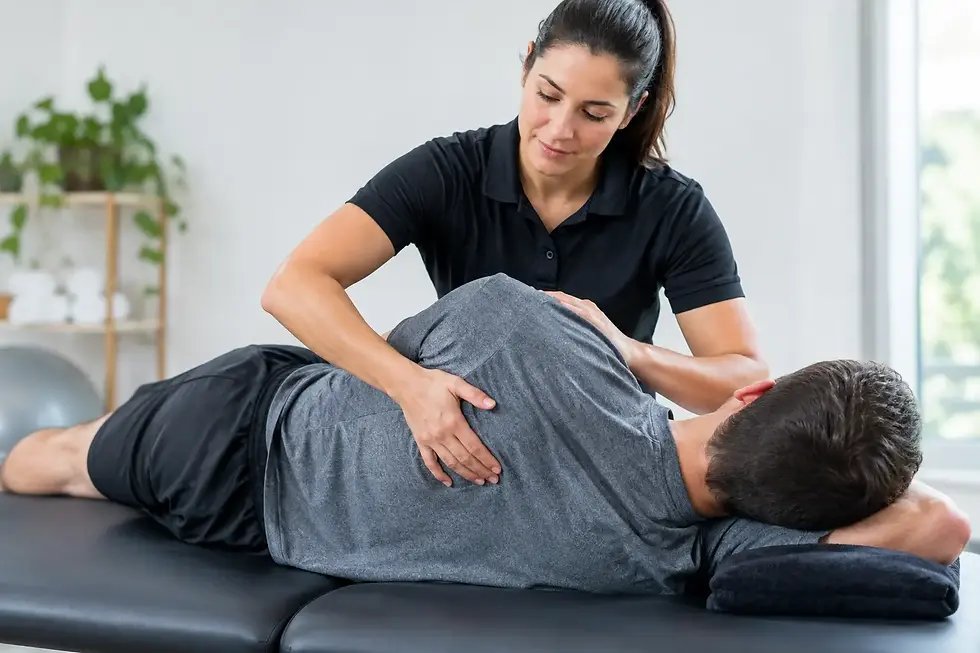
Physiotherapy can combine a detailed movement assessment, targeted exercise, activity modification, and return-to-work or return-to-sport planning. Chiropractic care, osteopathy, massage therapy, and acupuncture may help address pain, muscle tension, joint mobility, and movement restrictions when used as part of a broader plan. Approaches such as Active Release Techniques, instrument-assisted soft tissue mobilization, fascial stretch therapy, cupping, or cold laser therapy may also be considered based on your presentation and goals.
Hands-on care can make movement feel easier and reduce symptoms, but it is most effective when paired with an active plan. If a treatment provides temporary relief but pain returns every time you resume normal activity, the next step is usually to adjust workload and build capacity rather than repeating passive treatment alone.
At Kinetica Health Group, one-on-one care makes it possible to coordinate treatment across disciplines when needed, while keeping the plan focused on practical outcomes: less pain, better mobility, and confidence returning to work, training, or daily routines.
Do not ignore numbness, weakness, or persistent pain
Many repetitive strain problems respond well to early care, but some symptoms need prompt medical assessment. Seek medical attention if you experience persistent numbness or tingling, sudden weakness, loss of coordination, major swelling, color changes in the hand or foot, pain after a significant injury, fever, or symptoms that consistently wake you at night.
It is also time to get assessed if you have adjusted your activity for a couple of weeks and symptoms are not improving, or if pain is limiting work, sleep, driving, or basic daily tasks. Waiting until discomfort becomes severe can make the return to normal activity longer and more frustrating.
A recovery plan should fit your real routine
The most useful treatment plan is one you can follow on a busy Tuesday, not just during a perfect week. That may mean two short exercise sessions instead of a long routine, workplace modifications you can actually implement, or a gradual return to the gym rather than stopping entirely.
Repetitive strain recovery is rarely about finding one magic treatment. It is about reducing the irritation, identifying why the problem developed, and steadily preparing your body for the demands you place on it. If pain is lingering or keeps returning, a focused assessment can replace trial and error with a clear path back to comfortable movement.


Comments