

Sciatica Treatment Options Guide for Relief
- 3 days ago
- 6 min read
Sciatica can make ordinary movements feel unexpectedly difficult. Sitting through a workday, getting out of a car, climbing stairs, or sleeping comfortably may become painful when irritation along the sciatic nerve sends symptoms from the low back into the hip, buttock, or leg. This sciatica treatment options guide explains what conservative care can involve, when symptoms need urgent attention, and how a coordinated rehabilitation plan can help you move with more confidence.
First, understand what sciatica is
Sciatica is not a diagnosis by itself. It describes symptoms caused by irritation, compression, or inflammation affecting the sciatic nerve or one of the nerve roots that forms it. The sensation may be sharp, burning, electric, aching, or tingling. Some people feel it primarily in the buttock, while others notice pain traveling below the knee into the calf, foot, or toes.
A disc bulge or herniation is a common cause, but it is not the only one. Spinal narrowing, arthritic changes, muscle-related irritation around the hip, and movement patterns that repeatedly load a sensitive area can also contribute. That is why an effective plan starts with an assessment rather than assuming every case of leg pain needs the same treatment.
A clinician will consider where your symptoms travel, what positions aggravate or ease them, changes in strength or sensation, your work and activity demands, and how your back and hips move. This helps identify the most appropriate starting point and whether further medical investigation is needed.
Sciatica treatment options guide: what usually helps
For many people, sciatica improves with conservative care over time. The goal is not simply to chase pain on a single day. It is to calm the irritated tissue, restore comfortable movement, improve strength and tolerance for everyday activities, and reduce the factors that may be keeping symptoms active.
Stay gently active when possible
Complete bed rest often makes stiffness, weakness, and fear of movement worse. Short, frequent walks and gentle changes of position can be more helpful than staying in one posture for hours. The right amount of activity depends on your symptoms. A walk that causes a brief, manageable increase in discomfort may be reasonable; pain that rapidly shoots farther down the leg or remains significantly worse afterward is a sign to adjust.
For office workers, this may mean standing up every 30 to 60 minutes, changing chair support, and taking a short walk between meetings. For active people, it can mean temporarily modifying training instead of trying to push through sprinting, heavy lifting, or deep bending that clearly aggravates the leg.
Physiotherapy and movement-based rehabilitation
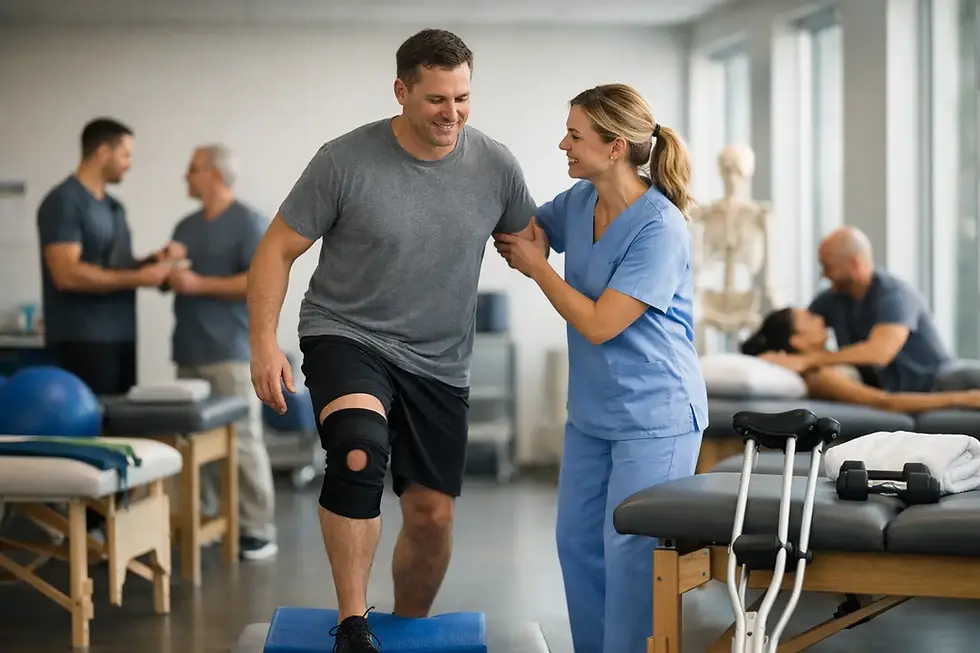
Physiotherapy often forms the foundation of non-surgical sciatica care. Your plan may include guided mobility work, graded strengthening for the trunk and hips, and practical coaching on lifting, sitting, walking, and returning to exercise.
The exercises should fit your presentation. Some people feel better with movements that gently extend the lower back, while others respond better to flexion-based positions or hip mobility work. There is no universally best stretch or exercise. Repeating an exercise that sends symptoms further down the leg is usually not the goal, even if it helped someone else online.
As pain settles, rehabilitation should progress beyond passive stretching. Building strength, endurance, balance, and confidence helps prepare you for the demands that matter to you, whether that is carrying groceries, working on your feet, cycling, or returning to sport.
Hands-on treatment for pain and mobility
Manual therapy can be useful when it is part of a broader plan. Depending on the assessment, a provider may use joint mobilization, soft-tissue treatment, Active Release Techniques, or instrument-assisted soft-tissue work to address stiffness and muscle guarding around the low back, hip, and leg.
These approaches may reduce discomfort and make movement easier in the short term. The trade-off is that hands-on care alone rarely solves the underlying problem for good. The most meaningful results usually come when temporary relief is paired with active rehabilitation and changes to the movements or positions that repeatedly flare symptoms.
Chiropractic care may also be considered for some individuals with low-back-related leg pain. A careful assessment matters, particularly when symptoms are severe, progressing, or accompanied by neurological changes. Treatment should be adapted to your comfort, health history, and response rather than following a one-size-fits-all approach.
Acupuncture, massage, and adjunct therapies
Massage therapy can help when protective muscle tension is adding to your discomfort or making it hard to rest and move comfortably. Acupuncture may be another option for pain modulation for some patients. Therapies such as cold laser treatment or cupping may also be used as supportive measures in select cases.
These options can be valuable tools, especially during a painful flare, but they work best when expectations are realistic. They may help create a window for better sleep, walking, or exercise. They should not replace a plan to restore movement and capacity over time.
Medication and medical care
Over-the-counter pain relievers or anti-inflammatory medication may be appropriate for some people, depending on their medical history and advice from a pharmacist or physician. Prescription medication, injections, and imaging are sometimes considered when symptoms are severe, persistent, or not responding to an appropriate period of conservative care.
Imaging is not always needed immediately. Many spinal changes appear on scans in people who have no pain at all, so a scan does not automatically explain your symptoms or determine treatment. A medical provider may recommend imaging when there are concerning neurological findings, major trauma, or symptoms that are not following an expected recovery pattern.
Surgery is generally reserved for specific situations, such as significant nerve compression with worsening weakness, or persistent disabling symptoms that have not improved with non-surgical care. For the right person, it can be an important option. For many others, a well-guided conservative program is the first and most appropriate step.
When sciatica needs urgent medical attention
Most sciatica does not require an emergency visit, but certain symptoms should never be managed by waiting it out. Seek urgent medical assessment if you experience:
New loss of bladder or bowel control
Numbness in the groin, inner thighs, or saddle area
Rapidly worsening leg weakness, foot drop, or trouble walking
Severe pain after a major fall, collision, or other trauma
Fever, unexplained weight loss, or a history of cancer alongside new severe back and leg pain
These signs can point to a condition that needs prompt medical evaluation. If you are unsure whether your symptoms are urgent, it is safer to seek advice right away.
A personalized plan matters more than a quick fix
Two people can describe “sciatica” and need very different care. One may have pain that is settling but needs a progressive return-to-running plan. Another may be recovering after a motor vehicle accident, dealing with several painful areas, and struggling to tolerate work or sleep. A third may need coordination between rehabilitation providers and their physician because numbness or weakness is changing.
This is where multidisciplinary care can make treatment more practical. At Kinetica Health Group, physiotherapists, chiropractors, massage therapists, osteopaths, and other rehabilitation providers can coordinate care around the same functional goals. Rather than receiving disconnected appointments, you can build a plan that addresses pain relief, mobility, strength, and a return to the activities that matter to you.
Consistency also matters. The best program is one you can realistically follow around your schedule, family responsibilities, commute, and insurance coverage. A plan with a few targeted exercises you can do consistently is often more useful than a long routine that never fits into real life.
What to expect during recovery
Sciatica recovery is rarely perfectly linear. Symptoms may improve overall while still flaring after a long drive, a demanding shift, poor sleep, or an activity your body is not ready to handle yet. That does not automatically mean you have caused damage or gone back to the beginning.
A useful measure of progress is whether symptoms are becoming less intense, less frequent, or less likely to travel down the leg. You may also notice that you can sit longer, walk farther, sleep more comfortably, or return to tasks that were previously difficult. These functional changes often matter as much as a number on a pain scale.
If your leg pain is limiting your work, sleep, exercise, or daily movement, you do not have to wait until it becomes unbearable to seek care. A thoughtful assessment can clarify what is driving your symptoms and give you a realistic next step toward moving more freely again.


Comments